


Understanding Incoterms 2020: A Practical Guide For International Trade
International trade requires clear agreements between buyers, sellers, suppliers, freight forwarders, and logistics partners. One of the most important tools used to avoid confusion in global trade is Incoterms 2020. These internationally recognized trade terms help define who is responsible for transportation, risk, insurance, customs clearance, and delivery at each stage of the shipment.
For companies involved in import, export, sourcing, and cross-border logistics, understanding Incoterms is essential. Choosing the right term can help reduce disputes, control costs, improve planning, and create smoother international trade operations.
Why Are Incoterms Important?
Incoterms help both buyers and sellers understand their responsibilities clearly before goods move. They define where the seller’s obligation ends, where the buyer’s responsibility begins, and which party is responsible for costs and risks during transportation.
Without clear Incoterms, businesses may face unexpected charges, customs delays, insurance issues, or disagreements about delivery responsibility. For this reason, every international shipment should be supported by a clear commercial agreement using the correct Incoterm.
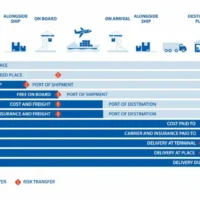
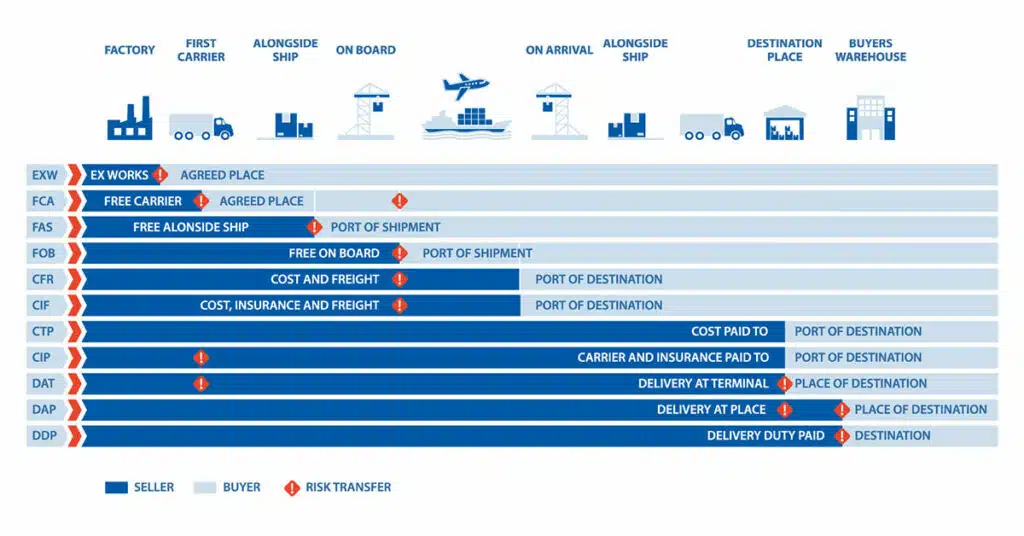
Overview Of The Eleven Incoterms 2020 Rules
Classification By Type Of Responsibility
Group E: Ex Works (EXW)
- The seller makes the goods available at their premises, while the buyer handles transportation, export procedures, costs, and risks from that point.
Group F: FCA, FAS, FOB
- The seller delivers the goods to an agreed location or carrier, after which the buyer takes responsibility for the main transportation and related risks.
Group C: CFR, CIF, CPT, CIP
- The seller pays for transportation to a named destination, but the risk usually transfers to the buyer earlier in the shipping process.
Group D: DAP, DPU, DDP
- The seller takes more responsibility for delivering the goods to the destination, with DDP placing the highest level of responsibility on the seller.
Classification By Mode Of Transport
Rules For Any Mode Of Transport: EXW, FCA, CPT, CIP, DAP, DPU, DDP
- These terms can be used for road, air, sea, rail, or multimodal transportation.
Rules For Sea And Inland Waterway Transport: FAS, FOB, CFR, CIF
- These terms are mainly used for sea freight and port-to-port shipping operations.
Main Functions Of Incoterms
- Risk Transfer: Incoterms define the exact point where risk transfers from the seller to the buyer.
- Cost Allocation: They clarify which party pays for transport, loading, unloading, insurance, duties, and other charges.
- Customs Responsibility: They help determine which party handles export and import clearance.
- Documentation Clarity: They support smoother preparation of invoices, packing lists, bills of lading, and other trade documents.
Key Changes In Incoterms 2020
- DAT Changed To DPU: Delivered At Terminal was replaced by Delivered At Place Unloaded to allow delivery at more types of locations, not only terminals.
- Insurance Updates: Insurance requirements were clarified, especially for CIF and CIP terms.
- FCA Bill Of Lading Option: FCA now includes an option for an on-board notation on the bill of lading when required.
- Own Transport Recognition: The rules now better reflect cases where the buyer or seller uses their own transport.
How Extended Blue Supports International Trade
Extended Blue supports businesses with import, export, logistics coordination, shipment planning, documentation follow-up, sourcing support, and cross-border trade operations. Our team helps clients manage international trade activities with clearer communication, better coordination, and practical operational support.
Whether you are sourcing goods, arranging shipment, coordinating documents, or planning international delivery, understanding the correct Incoterm can help protect your business and improve the efficiency of your trade process.
Conclusion
Incoterms 2020 are an essential part of international trade. They help businesses define responsibilities, manage costs, reduce risk, and avoid misunderstandings between buyers and sellers. For importers, exporters, and trading companies, using the correct Incoterm is a key step toward smoother and more reliable global business operations.